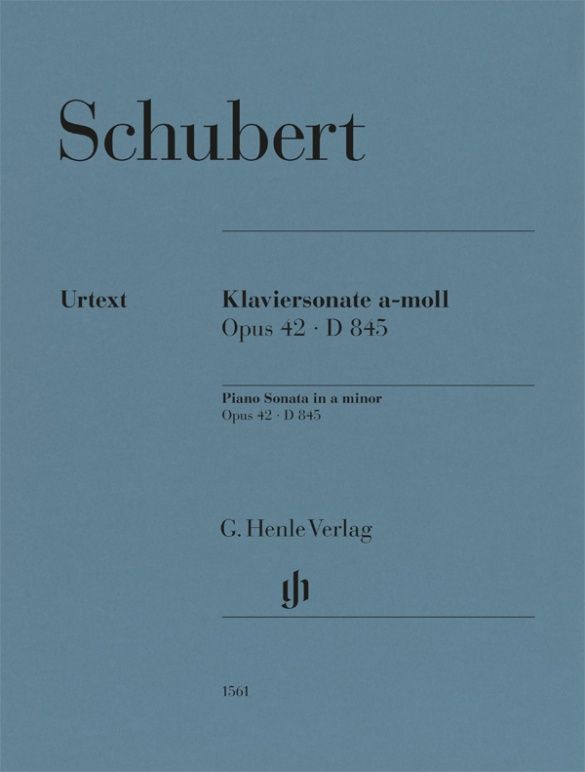
Il 19 novembre 1828 moriva a Vienna Franz Schubert, uno dei compositori che io amo di più. In particolare, da sempre ammiro e studio i suoi Lieder e le sue Sonate per pianoforte e quindi in questa occasione vorrei soffermarmi sulla Sonata in la minore op. 42 – D. 845, una tra le mie preferite in tutta la sua produzione. Composta nel maggio 1825, fu dedicata all’ arciduca Rudolf von Österreich, uno tra i migliori amici e sostenitori di Beethoven per la cui intronizzazione ad arcivescovo il compositore di Bonn aveva scritto la Missa Solemnis e pubblicata col titolo di Première Grande Sonata. Il lavoro fu recensito molto favorevolmente dalla Leipziger Allgemeine Musikalische Zeitung, che ne scrisse in questi termini:
Hier führt, einmal umgekehrt, ein Musikstück den Namen Sonate, an dem die Phantasie ganz offenbar den größten und entscheidensten Anteil hat […] übrigens aber, dem Ausdruck und der Technik nach, zwar in rühmlicher Einheit beharrt, aber in den abgesteckten Grenzen sich so frei und eigen, so keck und mitunter auch so sonderbar bewegt, daß es nicht mit Unrecht Phantasie heißen könnte. In dieser Hinsicht kann es nur mit den größten und freiesten Sonaten Beethovens verglichen werden. […] Sie ist reich an wahrhaft neuen und originellen melodischen und harmonischen Erfindungen; ebenso reich und noch mannigfaltiger im Ausdruck; kunstvoll und beharrlich in der Ausarbeitung […] und dabei doch durchgängig wahre Pianoforte-Musik.
Qualche particolare in più sulla vicenda compositiva. Nel febbraio 1823, dopo una pausa di quattro anni dal genere sonatistico, Schubert compose la Sonata in la minore D.784 in tre movimenti, dal tono particolarmente sconsolato. Nell’ estate del 1824 tornò alla sonata per pianoforte nello spirito sopra descritto, questa volta a quattro mani, la Sonata in do maggiore Grand Duo D. 812. Qui si rivela per la prima volta il nuovo stile pianistico schubertiano: spazioso, orchestrale, ampio, quasi di tono sinfonico. Fu solo nell’ aprile del 1825 che venne pubblicata la successiva Sonata in do maggiore D. 840, conosciuta fin dalla sua pubblicazione postuma con il nome di Reliquie, lasciata interrotta poco prima della fine del Minuetto. A differenza di quanto accaduto nel caso della Sinfonia Unvollendete, ciò non portò ad alcun temporaneo allontanamento dal genere, perché nell’ estate del 1825 Schubert compose einer neuen Sonate, ossia quella in la minore D. 845 di cui ci stiamo occupando. Purtroppo l’ editore Pennauer, oltre a commettere altre sciatterie, distrusse il manoscritto, tanto che non si conosce la data esatta della sua creazione. La seguente Sonata, la D. 850 conosciuta come Gasteiner, uscirà poco tempo dopo, pubblicata dal rinomato editore Artaria dietro un onorario molto più consistente. Circa un anno più tardi uscirà anche il terzo lavoro analogo di quel periodo, la Sonata in sol maggiore D. 894.
La Sonata D. 845, la prima di Schubert ad essere pubblicata, è anche una delle sue ultime opere importanti scritte nella tonalità di la minore. Oltre alla già citata sonata D. 784, anche la sua prima Sonata per pianoforte completata è in la minore: la D. 537. ultimata nel 1817. Altre opere di Schubert in la minore includono i Lieder Die Götter Griechenlands D. 677, Der Zwerg D. 771 e il Quartetto d’archi D. 804 Rosamunde.
Come negli altri due lavori coevi, anche nella Sonata in la minore Schubert adotta la struttura in quattro movimenti. il Moderato iniziale è scritto in una Forma Sonata piuttosto atipica. Questo è avvertibile particolarmente nello sviluppo, caratterizzato da un’ accentuata dilatazione e caratterizzato da un senso di dilatazione ed erraticità ritmica e costuisce un primo esempio di questa caratteristica distintiva delle opere mature di Schubert (si vedano le sezioni analoghe delle ultime Sonate e del Quintetto per archi). La tonalità relativa di Do maggiore, così come la sottominante Fa maggiore, svolgono ruoli strutturali e drammatici importanti in questo e nei movimenti successivi. Il tono è punteggiato da passi drammatici e da un accentuato climax alla conclusione.
Il secondo movimento, Andante poco mosso in do maggiore, comprende cinque Variazioni su un semplice tema di 32 battute, con una variazione minore parallela seguita da un cambio di tonalità che prepara un ritorno conclusivo alla tonica per la variazione finale. Questo formato, che evita la monotonia tonale, è identico a quello dell’ Impromptu N° 3 in Si♭, D 935. Il pezzo termina con una breve coda e una cadenza plagale.
Lo Scherzo, in la maggiore con un Trio in fa maggiore, si basa su elementi del primo movimento (in particolare la sequenza di accordi V-I-V-I del secondo tema) e sintetizza le relazioni armoniche e tematiche di tutto il pezzo, un approccio che Schubert ha utilizzato nei movimenti analoghi delle sue Sonate pianistiche mature. Lunghezze di frase dispari, effetti di subito e modulazioni non preparate conferiscono alla pagina un carattere bizzarro. Il Trio in fa maggiore, un interludio di tono pastorale, forma con essa un netto contrasto.
Il Finale, Rondò – Allegro vivace con ricapitolazione abbreviata, nella tonalità d’ impianto, è impostato su un tema dal tono di Toccata come quelli del primo e terzo tempo, e presto modula in Do maggiore. La sequenza di accordi V-I-V-I appare di nuovo in modo prominente negli episodi intermedi. La struttura è asciutta ed essenziale, specialmente per un finale di Schubert, e il movimento termina con una sezione di chiusura in accelerando.
Veniamo ora agli ascolti. La prima versione che ho scelto è quella di Clara Haskil (1895-1960), qui in una registrazione dal vivo effettuata il 7 settembre 1956 al Festival di Besançon.
Peter Feuchtwanger, pianista e insegnante che assistette al concerto, ci ha lasciato una vivida descrizione dell’ evento in un articolo apparso sulla rivista Classical Piano nel 1995, in occasione del centenario della nascita della pianista rumena:
Looking back on the Besançon recital, I recall vividly Clara Haskil’s extreme nervousness and anxiety, projecting to all parts of the hall. Time and time again she readjusted the height of the piano stool, as if in one final bid to postpone the dreaded beginning of the recital.
However, from the very first few bars of the theme of Mozart’s Duport variations, K 573, opening the recital, the listener was transported into a subliminal world of pure music. To quote a critic from an English newspaper: ‘This was Mozart for the gods.’
After the vociferous applause died down, Beethoven’s Sonata in E flat, Op 31 No 3, was executed with an overall and terrifying urgency, such as I have never heard before nor expect to hear again.
In particular the Scherzo in 2/4 (conceived with gallows humour and relentless forward drive) and the presto con fuoco tarantella last movement (following a most serenely played menuetto) had the audience sitting on the edge of their seats, a near enough impossible feat to accomplish, considering Haskil’s debilitated physical condition.
After the interval we were to hear the Schubert sonata previously mentioned, followed by Schumann’s Kinderszenen to end the programme, a work attesting once more to Haskil’s rare capacity to identify completely with her subject, this time the elusive and magical world of the child.
To quote Hilary Finch in a recent record review in the Times (28 January 1995): ‘Haskil is one of those rare artists who seems to be able to reinhabit the dreamlike consciousness of a child still undivided from the sentient world of plant and animal life. Luminous finger work, courageous spontaneity and the subtlest of dynamic nuances animate each passing moment of joy and pleading, play and dream.
Di seguito, ascoltiamo l’ interpretazione di Sviatoslav Richter (1915-1997), da sempre ritenuta una tra le due o tre incisioni di riferimento della Sonata op. 42 e un modello assoluto da tener presente per tutti quelli che hanno affrontato il pezzo dopo il grande pianista russo.
Questa è la recensione apparsa sulla celebre rivista musicale inglese Gramophone in occasione della prima uscita del disco in Occidente:
This performance of the Op. 42 A minor Sonata can give no disappointment to anyone, however high their expectations of Richter are fixed: for it is surpassingly beautiful, unfailingly poetic, and filled with warmth and human feeling. Perfect execution, with wonderfully graded tone, even runs and flawless control is allied to superfine musical intelligence and affection for Schubert’s music. Some of Richter’s tempi are unusually slow. Certain English editions of this Sonata mark two alternating tempi in the slow movement, moderato for the opening crotchet utterance (minim 80 in the Augener edition), and then a slightly faster one (minim 100) for the figure that opw with the octave drop and repeated quavers. The Peters edition has none of these changes. It is moderato throughout, and so Richter plays it at a very moderate moderato, which allows for thoughtful inflexions, and delicately adjusted tonal gradients of extreme beauty. I do not want to imply that the tempo is stiffly maintained -far from it: the beat is always responsive to the shape and emotional progress of the music. But there is under it all a feeling of natural pulse-far more so than in Kempff’s performance, taken at the more usual speed, where the tempi seem, by comparison, to be applied to the music rather than to be suggested naturally by it. Both pianists make the repeat in the first movement.
One of the things Richter seems to do more beautifully than any other pianist is to play repeated notes. It seems a simple thing to say, but you will understand what I mean when listening to the close of the exposition; or the triplets of the last variation, second movement; or even the very first two notes, wonderfully articulated, of the Scherzo. The Scherzo is played with a lovely appreciation of Schubert’s rhythmic fancy-the minima held across the bars, the sudden play of quavers. The Trio is taken with exceptional slowness and a perfect sense of line. (Kempff, at a more usual tempo, has this too, but the performance is less moving.) In the Finale Richter makes much of the magical Schubertian effect of moving from minor to major.
All in all, a record of this great Sonata not to miss, and one too to silence those parrotcries about Schubert being unable to compose large-scale works. The fidelity of the recording is not outstandingly high, by any means, but acceptable. It is a performance that quite outclasses Kempff’s-highly praised though that was when it appeared six years ago. (A.P.)
SCHUBERT. Piano Sonata No. 16 in A minor, D.845. Sviatoslav Richter (piano). Parlophone Mono PMA 1049. Gramophone. July 1959. Page 48
Si tratta di due esecuzioni assolutamente paradigmatiche, di un tale valore che la preferenza per l’ una o per l’ altra è solo questione di gusti personali. Come ho detto più volte scrivendo di interpretazione comparata, a questi livelli non si fanno confronti se non per le concezioni e l’ approccio interpretativo. Buon ascolto a tutti.
Scopri di più da mozart2006
Abbonati per ricevere gli ultimi articoli inviati alla tua e-mail.

 mozart2006